
Concept of the digital economy
The digital economy can be understood as an economic environment in which production, buying, and consumption activities increasingly rely on digital technology, data, and the Internet. If in the past businesses primarily created value by producing and selling tangible products, in the digital economy, value also comes from organizing and processing information. An e-commerce platform does not directly produce goods but decides which products are seen, who they reach, and at what price. A ride-hailing app does not own many vehicles but controls how customer travel demands are connected with drivers.
This shows that the digital economy is not a "new industry," but rather a common environment in which all businesses operate. Manufacturing companies must also manage data just like technology companies. Retail businesses must view digital platforms as part of their business system, not just as a secondary sales channel. When data and digital platforms become the core of business operations, companies can no longer see technology merely as a supporting tool; they must view it as a factor directly linked to how revenue and profit are generated.
Characteristics of the digital economy
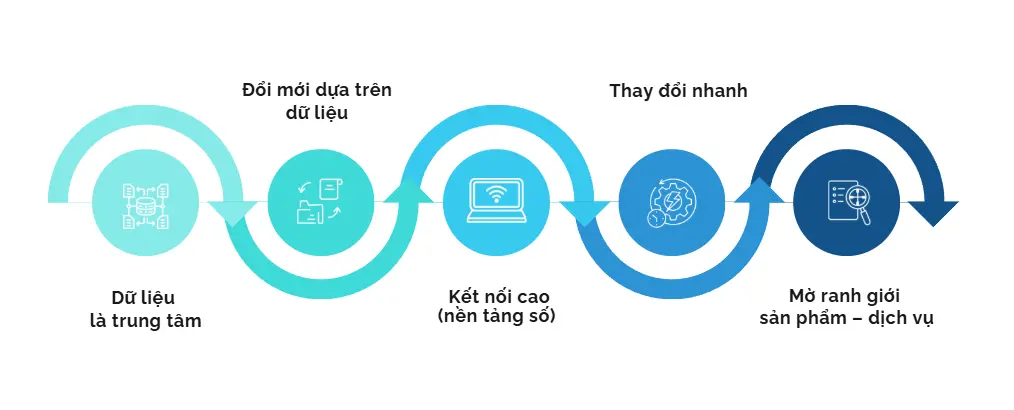
The most important characteristic of the digital economy is the central role of data. Data is not only used to store information but has become a resource for businesses to understand the market and make decisions. In practice, data comes from many familiar sources such as sales invoices, customer purchase history, feedback on social media, or signals from machinery in factories. When this data is combined and analyzed together, businesses can gain clearer insights into customer behavior, operational efficiency, and consumer trends. As a result, decisions are based not only on intuition but on what is actually happening.
Another characteristic is the high level of connectivity and rapid pace of change. Economic activities are increasingly taking place on digital platforms, where sellers, buyers, shipping units, and payment gateways all participate in the same system. An online order is not just a transaction between two parties, but a coordination of multiple departments and systems. At the same time, consumer habits and technology are changing very quickly. An effective sales channel today can lose its effectiveness in just a short period. Additionally, the digital economy also blurs the lines between products and services. A machine is not only sold as equipment but also comes with remote monitoring services. A consumer product is not just a commodity but is also linked to applications and user accounts.
The impact of the digital economy on businesses
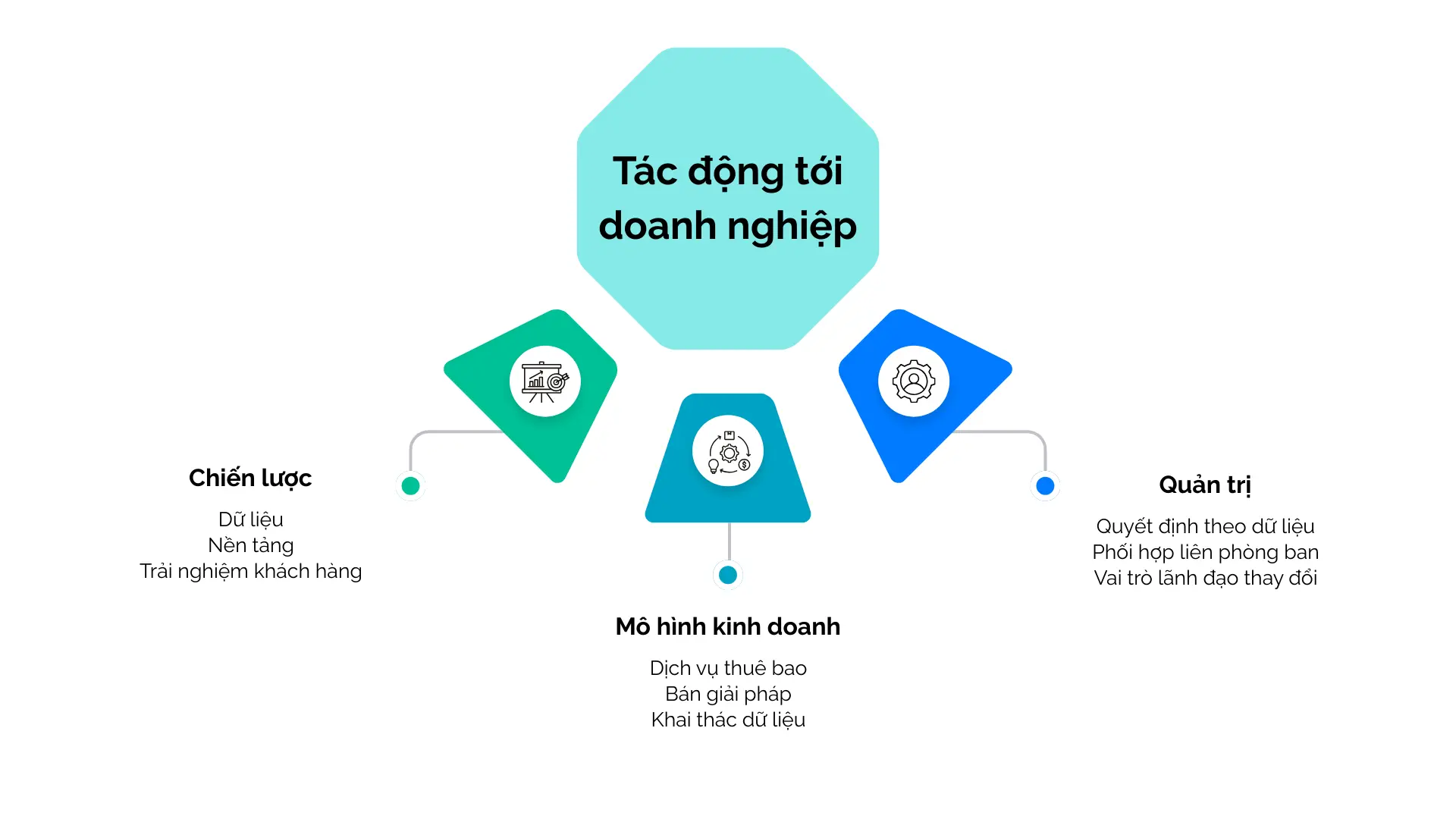
Impact on strategy
In the digital economy, business strategy revolves not just around market share or production scale, but around data, platforms, and customer experience. In retail, the strategy is no longer just about opening more stores, but about connecting physical stores with online channels to understand where customers are buying, how they compare prices, and how they make decisions. When this behavior is understood, businesses can then know which products, channels, and timing to focus on.
In production, strategy is not just about increasing capacity, but also about enhancing the ability to respond quickly to the market. When data shows that a product line is selling slowly, the production plan can be adjusted early rather than waiting until the end of the period to discover increased inventory. Thus, strategy in the digital economy is linked to the ability to see changes early and make timely adjustments, not just to the scale of investment.
Impact on the business model
The digital economy is changing the way businesses create and profit from value. Many new models are emerging based on platforms and data. In services, companies can shift from selling individual products to offering monthly service packages. In manufacturing, businesses can sell operational solutions instead of just selling machinery. In retail, revenue comes not only from sales but also from advertising and customer behavior data.
The boundaries between industries have thus become blurred. A retail business can engage in logistics. A manufacturing company can become a digital service provider. This forces businesses to rethink their role in the market: are they just selling products or are they providing an ecosystem of services centered around the customer.
Impact on corporate governance
The digital economy forces businesses to change their management approach, especially in decision-making. Previously, managers often relied on monthly or quarterly reports. Now, they can track sales on a daily or hourly basis. Instead of asking "how much was sold this month," they can ask "why are sales slower today than yesterday." The change in questioning leads to a change in management practices.
This change also requires departments to collaborate more closely. Data cannot be isolated within each department; it needs to be shared to create a common picture. Sales, logistics, and marketing need to look at the same data system instead of each having their own figures. The role of leadership is also changing: leaders must not only issue commands but also guide how to use data for decision-making. If leaders do not value data, it is very difficult for the organization to operate according to the logic of the digital economy.
What do businesses need to do in the context of the digital economy
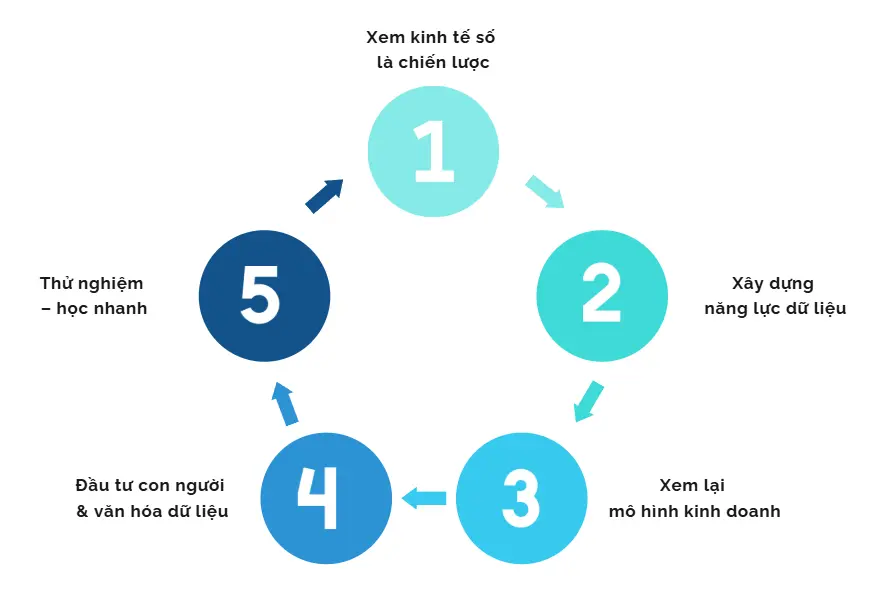
First of all, businesses need to view the digital economy as a strategic issue, not just software investment. Each technology investment should answer the question: which decision or process does it help improve? If software is purchased without being linked to a specific issue, businesses can easily fall into a situation where they have a system but do not create real change.
Next, businesses need to build data capabilities from basic tasks such as standardizing revenue recognition, normalizing customer information, and connecting data across departments. When data is fragmented, businesses cannot have a comprehensive view of operations and the market. At the same time, businesses need to review their business model: whether current products can be linked to digital services and whether additional value can be created from data.
Finally, businesses need to invest in people and a culture of data usage. Employees need to know how to read data and ask questions based on it. Leaders must be ready to adjust decisions when the data shows something different from their initial perceptions. In the digital environment, no model is always correct. Experimenting on a small scale, evaluating with data, and continuously adjusting helps businesses reduce risks and adapt more quickly to changes.
Conclusion
The digital economy does not require businesses to immediately change their business models, but it does necessitate a shift in perspective regarding data, customers, and processes. As the market is driven by data and platforms, decisions purely based on experience become increasingly risky. Businesses do not fall behind due to a lack of technology, but because they continue to manage in the old way in a changed environment. In this context, the key capability lies not in the number of systems owned, but in the ability to turn data into insights and insights into timely actions. Therefore, the digital economy is not just a new context for business, but a direct test of each company's management capabilities.
Reference source
- OECD. Digital Economy Outlook.
- OECD. Measuring the Digital Transformation.
- World Bank. World Development Report: Digital Dividends.
- UNCTAD. Digital Economy Report.