
What is IoT?
The IoT can be simply understood as the process of attaching sensors and network-connected devices to machinery, allowing the machinery to send information about its operational status. This information can include temperature, vibration, rotation speed, machine run time, or power consumption. In a factory, IoT is not a standalone system but is directly integrated into the machines that are in operation. When devices are connected, managers do not need to check each machine individually; they can see the operational status on a screen. Monitoring is no longer based on slow reports but on real-time data occurring during production. The important point of IoT is not just having data, but that the data accurately reflects the condition of the machinery. As a result, businesses can know whether the machines are running well, where there are signs of failure, and which issues should be addressed first.
What are the characteristics of IoT in manufacturing?
The biggest feature of IoT is its ability to connect multiple machines together within the same system. Instead of each machine operating individually, IoT allows businesses to see the entire production line as a cohesive picture. When a process encounters a problem, managers can immediately see how it affects other processes. Another point is that IoT can monitor multiple metrics simultaneously. In a factory, metrics such as temperature, vibration, speed, pressure, and electricity consumption are directly related to product quality and production costs. When these metrics are continuously measured, businesses do not have to guess whether the machines are operating correctly; they can check with specific numbers. Additionally, data from IoT is sent continuously and can be viewed almost instantly. As a result, businesses can detect early signs of abnormalities, such as machines vibrating more than usual or experiencing sudden spikes in electricity consumption. Instead of waiting for a machine to break down before addressing the issue, businesses can intervene early to prevent major incidents.
What benefits does IoT bring to manufacturing businesses?
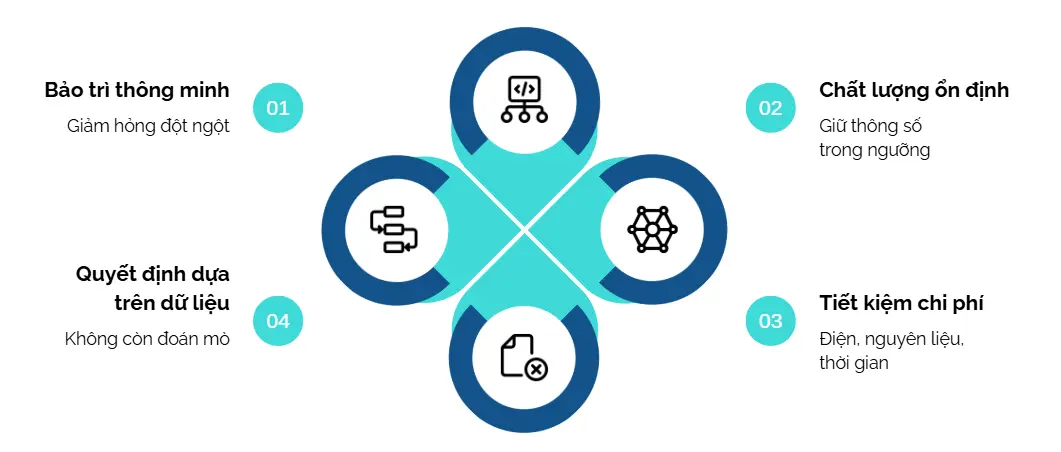
The most obvious benefit of IoT is that it helps businesses monitor and control their factories better. When machines continuously send data, managers can identify which processes are slowing down, which machines are operating inconsistently, and when productivity is decreasing. Adjustments are therefore based on the actual condition of the factory, rather than relying on gut feelings or personal experience. Another important benefit is the reduction of repair costs and the limitation of unexpected machine downtime. By monitoring vibration, temperature, or machine speed, businesses can detect early signs of deterioration and plan repairs before a machine fails significantly. This approach helps reduce machine downtime, avoid significant losses, and extend the lifespan of equipment. IoT also helps improve product quality and reduce waste. When specifications are continuously monitored, businesses can keep processes within acceptable limits. If any metrics exceed thresholds, the system will alert for immediate adjustments during production, thereby reducing defective products. At the same time, data on electricity, water, and raw materials also indicates which areas are consuming more than usual, helping businesses find ways to save costs.
How is IoT used in factories?
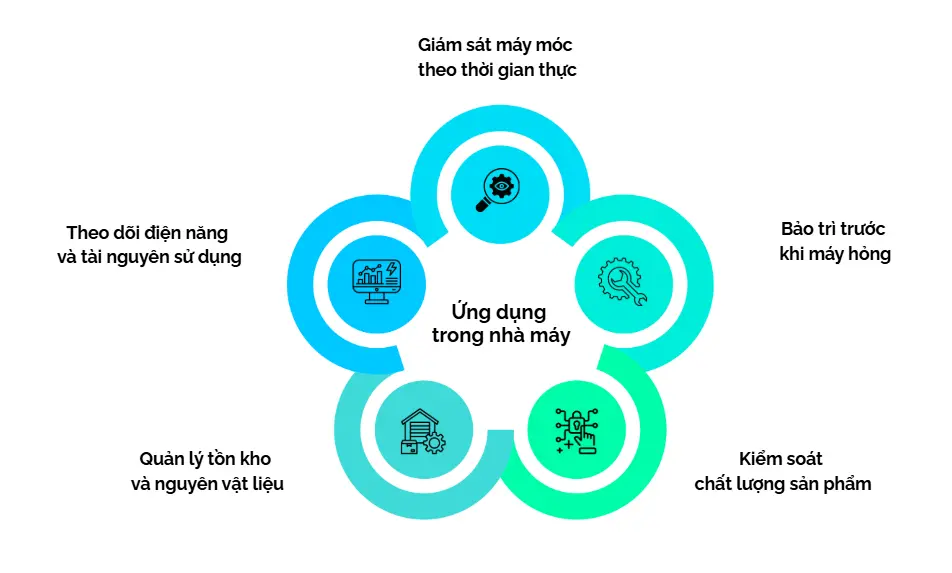
A common use of IoT is to monitor machinery in real-time. Sensors are attached to machines to measure temperature, vibration, and rotation speed, allowing businesses to know the condition of the machines without having to check each location. Continuous monitoring helps detect small changes early that could lead to major breakdowns. IoT is also used for proactive maintenance. When the system detects that a motor is vibrating more each day or the temperature is gradually increasing, businesses can proactively schedule repairs before the machine fails. This is very important for the main machines in the production line, as just one machine stopping can cause the entire line to halt. Additionally, IoT helps manage quality and inventory. In the food industry, sensors monitor temperature and humidity to ensure proper storage conditions. In manufacturing, IoT helps monitor pressure and speed to maintain a stable processing operation. Inventory level sensors also assist the purchasing department in knowing when to order more raw materials, preventing stock shortages that could disrupt production.
What challenges do businesses face when implementing IoT?
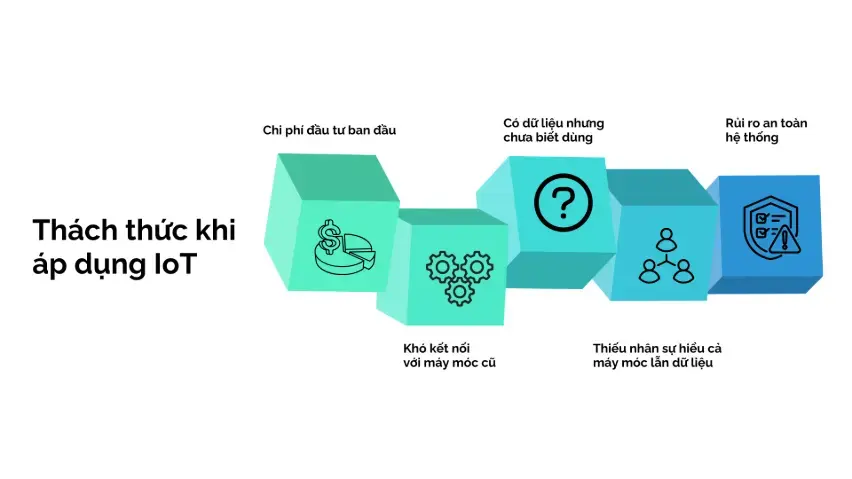
The first difficulty is the investment cost and determining a suitable starting point. To implement IoT, businesses need to install sensors on machinery, set up connectivity devices, and build a data collection system, which requires an initial investment. Meanwhile, benefits such as reducing machine breakdowns, saving electricity, or increasing productivity often only appear after a period of operation. If a business has not clearly defined specific goals, such as which machines to monitor, where to reduce incidents, or which areas to save costs, the investment can easily become scattered, installing many devices without significantly improving operational efficiency.
The next challenge is connecting IoT with the existing systems in the factory. Many factories still use old machinery that was not designed to transmit data externally, so connectivity often faces obstacles. Businesses may need to install additional signal converters or intermediary devices so that sensors can send data to the management system. If each area uses a different method of connection, the data will be scattered across various software and screens, making it difficult for managers to see the overall status of the entire production line.
Finally, there is the human factor and system safety. IoT generates a vast amount of operational data, but if the technical and management teams are not accustomed to monitoring daily metrics or do not know how to use the data to adjust decisions, those numbers will only serve as references without creating real value. At the same time, when machines are connected to the network, the risk of unauthorized access or system disruption also increases. In a manufacturing environment, even a brief interruption in the control system can cause the entire production line to stop, resulting in significant losses. Therefore, system security and personnel training need to be implemented in parallel from the very beginning of IoT deployment.
Conclusion
The IoT helps manufacturing businesses gain a clearer understanding of how their factories are operating, from the condition of machinery and product quality to electricity and raw material consumption. When data is collected and used correctly, businesses can shift from management based on intuition to management based on the actual condition of the production line. However, IoT is not just about attaching sensors to machines. The effectiveness of IoT depends on how businesses integrate this technology with specific operational issues, connect data between departments, and are ready to use data to adjust decisions. In an increasingly competitive landscape, IoT not only helps save costs and improve quality but also enables businesses to respond more quickly to market changes.
This article is an in-depth content belonging to the Digital Transformation topic of RIDE. For a comprehensive and systematic view, please refer to: Digital Transformation of Enterprises: A Comprehensive Guide from Strategy to Implementation.
Reference source
IBM. What is the Internet of Things (IoT)?
IBM. IoT in manufacturing.