%20management%20in%20the%20digital%20age:%20From%20data%20to%20personalized%20journey.?unique=e0c36b5)
1. What is customer experience management (CX)?
Customer Experience (CX) management is the process of designing, managing, and optimizing all touchpoints between customers and the business throughout the journey from awareness, consideration, and purchase to post-sale.
The customer experience is not just about a single interaction, but rather a combination of many factors:
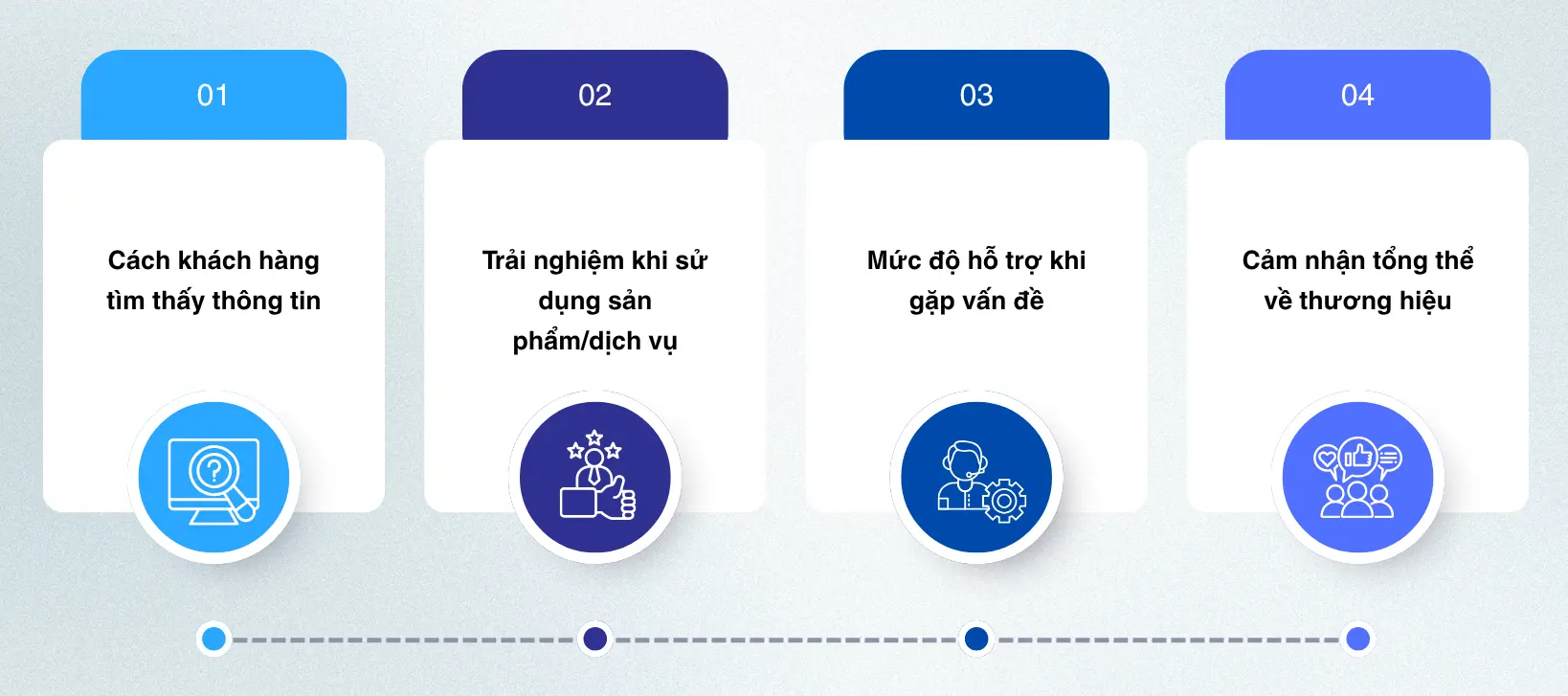
A positive experience not only increases satisfaction but also fosters loyalty and the likelihood of recommending the brand to others.
2. The role of data in CX management
In the digital environment, every customer interaction generates data, from website browsing behavior, purchase history, to service feedback and interactions on social media platforms. This data plays a foundational role in helping businesses understand customers more comprehensively, not just at a surface level but also in terms of behavior, needs, and expectations. Through data analysis, businesses can identify different customer segments, track changing behavior trends, and uncover shortcomings in the current experience. However, data only truly realizes its value when it is connected and processed systematically. If data is scattered across multiple departments or not integrated effectively, businesses will struggle to obtain a complete picture of their customers, thereby limiting their ability to improve the experience consistently and purposefully.
3. Customer Journey and Personalization Needs
The customer journey is becoming increasingly complex in the context of businesses operating across multiple channels. A customer may start by searching for information on a search engine, accessing products through social media, referencing a website, and completing a transaction in-store or on an online platform. When these touchpoints are not connected, the customer experience can easily become disrupted and inconsistent. Conversely, if a business can track and understand the entire journey, they will have a foundation to design a more seamless experience. On this basis, personalization becomes an important advancement in customer experience management. Instead of providing a one-size-fits-all experience, businesses can tailor content, messaging, and offers to suit different groups or individuals. This not only helps enhance satisfaction levels but also contributes to improving engagement effectiveness and conversion rates throughout the entire customer journey.
4. Common challenges in CX management
Although the importance of customer experience has been clearly recognized, many businesses still face challenges in practical implementation. One of the major challenges is that customer data is often scattered across various systems such as sales, marketing, or customer service, and is not effectively connected, leaving businesses without a comprehensive view. Additionally, many organizations have yet to develop a cohesive CX strategy, resulting in improvements to the experience occurring only sporadically at individual touchpoints rather than throughout the entire journey. Furthermore, personalizing the experience at scale requires a combination of data, technology, and processes, which many businesses still struggle with. Finally, the gap between data and action remains a significant issue: even with data and analysis, if it is not transformed into specific decisions, customer experience will be difficult to improve significantly.
Therefore, in the digital age, customer experience is no longer a "supplementary" factor, but is becoming a core part of the business development strategy. The ability to understand customers, design appropriate journeys, and personalize experiences will determine the level of engagement and the long-term value of customers to the business.
Data plays a foundational role in this entire process, but true value only emerges when the data is connected, analyzed, and transformed into specific actions.
At RIDE, we also recognize that enhancing data management capabilities and understanding customer behavior are crucial factors that help businesses gradually build more effective customer experiences in the digital environment. This is not just a story about technology, but also a story about how businesses think and make decisions based on data.