
Concept of Big Data
Big Data is a collection of data generated during the operations of a business and requires appropriate storage, processing, and analysis technologies to be effectively utilized. As businesses expand their operations, the data generated from sales, customers, operations, and digital systems increases rapidly to the point where traditional processing tools can no longer keep up. Implementing data analytics systems helps businesses transform raw data into meaningful information, supporting answers to management questions such as how market demand is changing, which operations are underperforming, and which customer segments provide the highest value.
Characteristics of Big Data
Big Data has three main characteristics. First, data is generated on a large scale due to many business activities and systems that produce information simultaneously. Second, data exists in various forms such as transaction data, customer feedback, images, or data from operational devices. Third, data is continuously updated, allowing businesses to monitor operational status in a timely manner rather than relying solely on periodic summary reports. These characteristics provide businesses with a more comprehensive information base to support management activities.
The role of Big Data in business management
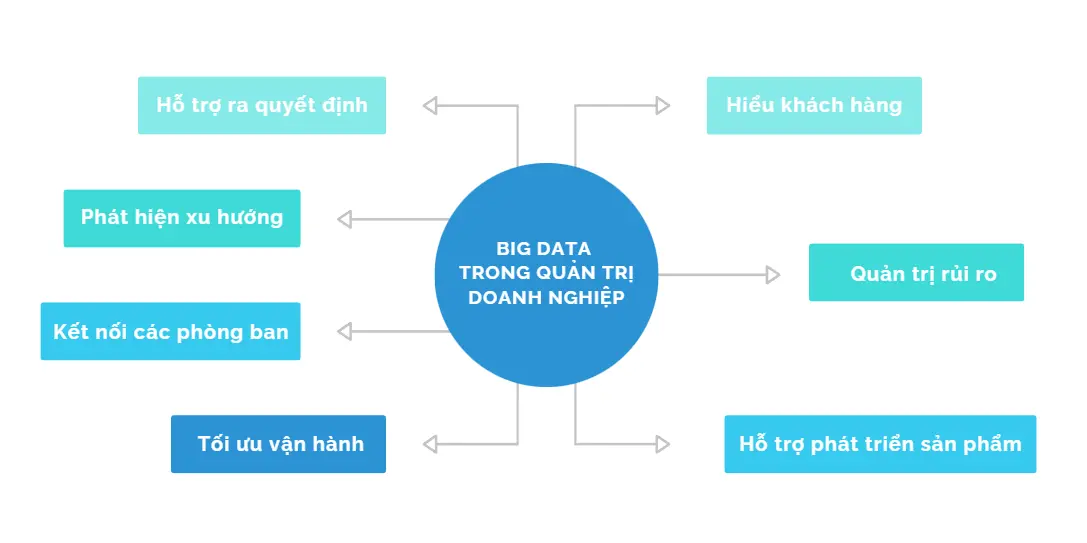
First of all, Big Data helps businesses enhance operational efficiency and forecasting capabilities. When data is analyzed correctly, companies can uncover relationships that are difficult to detect through ordinary observation. In retail, combining sales data with the time of year or weather helps forecast demand more accurately. Instead of restocking based on intuition, businesses can adjust inventory based on actual figures. In manufacturing, operational data helps identify which processes frequently cause errors and need to be improved first.
Big Data also changes the way departments work together. When data is shared, sales, marketing, and operations no longer work in isolation. The sales department sees market demand increase or decrease, logistics adjusts the inventory, and marketing designs appropriate programs. Data becomes the "common language" for departments to understand each other and coordinate actions in the same direction.
In addition, Big Data helps businesses understand customers and improve operations. In factories, data from machines allows for early detection of signs of malfunction to repair before issues occur. In services, data shows which steps cause customers to wait the longest, enabling process improvements. Analyzing shopping behavior and feedback helps businesses better understand each customer group, allowing them to adjust products and approaches accordingly. As a result, Big Data not only serves long-term strategies but also directly impacts daily operations.
Challenges in Applying Big Data
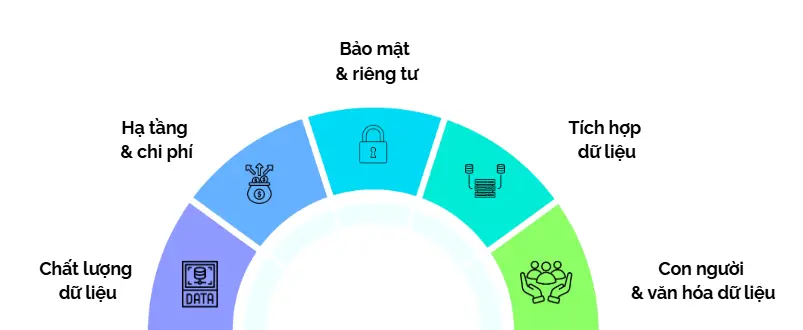
Although it brings many benefits, Big Data is not easy to implement in practice. The first challenge is data quality. If each department records information in different ways, the data will be inconsistent and difficult to analyze. When the input data is inaccurate, the analysis results can easily lead to wrong decisions.
The next challenge is cost and systems. As data continues to grow, businesses must invest in appropriate storage and processing systems. This is particularly difficult for small and medium-sized enterprises, as the benefits are often not immediately visible. If Big Data is not tied to specific goals such as reducing inventory or minimizing product defects, the investment can become costly without delivering clear results.
In addition, Big Data imposes high demands on security and personnel. The increasing scale of data also raises the risk of information leaks, especially regarding customer data. At the same time, to effectively use Big Data, businesses need individuals who can read data and think based on it. More importantly, businesses must truly allow data to participate in decision-making, rather than just using data to "legitimize" pre-existing decisions.
Conclusion
Big Data not only reflects the development of technology but also marks a shift in how businesses manage and operate. When data is harnessed correctly, companies can gain clearer insights into operational efficiency, detect changes in the business context early, and proactively adjust plans instead of merely reacting when issues arise. In an increasingly volatile and complex competitive landscape, the advantage does not belong to the company with the most data, but to the company that knows how to turn data into insights and translate those insights into timely actions. This is a crucial factor that helps businesses enhance operational efficiency and maintain a long-term competitive advantage.
This article is an in-depth content belonging to the Digital Transformation topic of RIDE. For a comprehensive and systematic view, please refer to:Chuyển đổi số doanh nghiệp: Hướng dẫn toàn diện từ chiến lược đến triển khai.
Reference source
- IBM. What is Big Data?
- IBM. Big Data analytics.
- McAfee, A. & Brynjolfsson, E. (2012). Big Data: The Management Revolution. Harvard Business Review.