
What is the level of readiness for digital transformation in businesses?
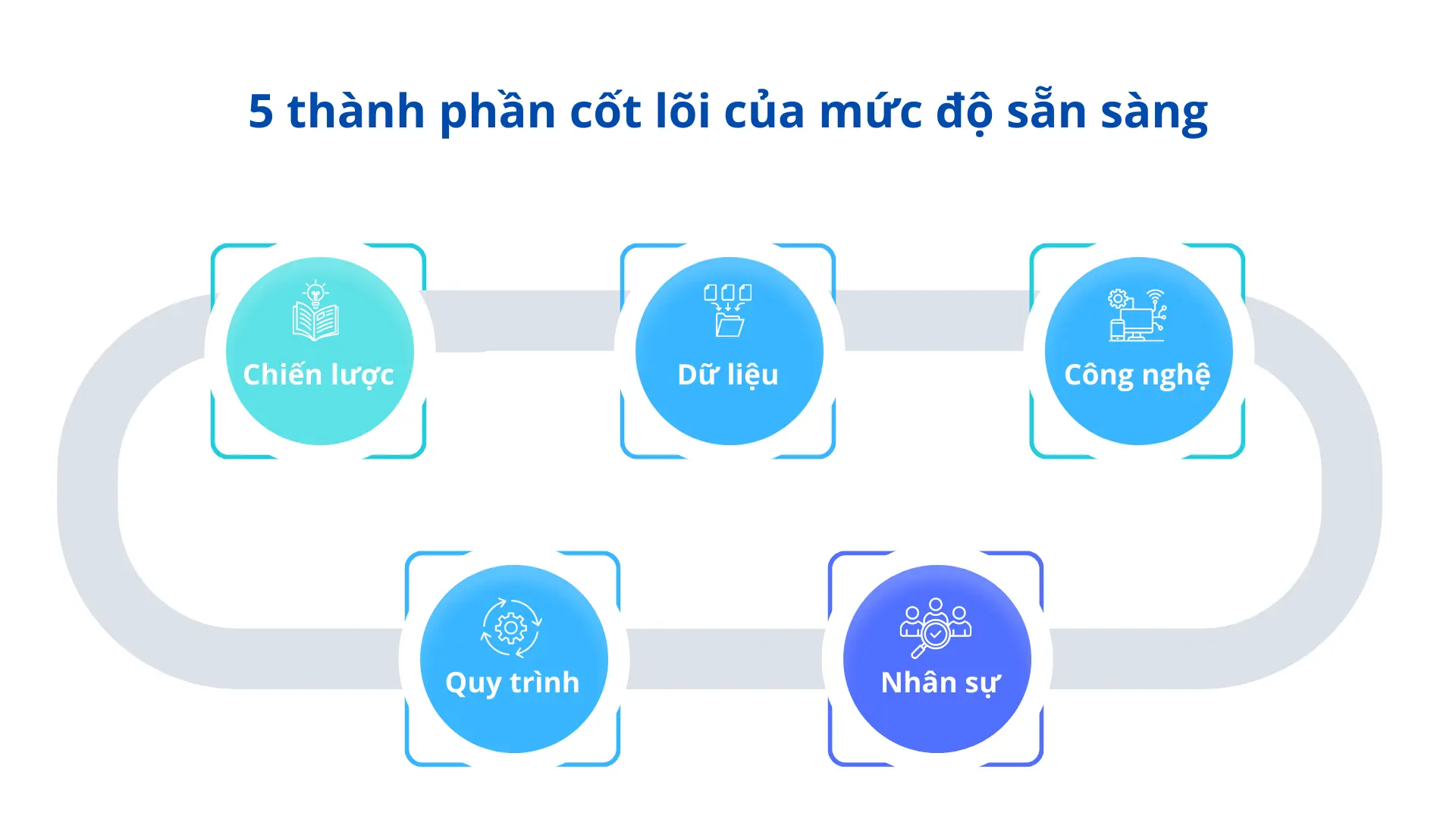
The level of readiness for digital transformation reflects a company's preparedness in terms of strategy, data, technology, operational processes, and human resources before implementing the transformation. This concept not only refers to owning modern technology but also reflects the ability to effectively coordinate between people, systems, and operations. In practice, some companies have adopted management software, but the data between departments remains siloed. Some units have analytical tools, but the teams have not yet leveraged the value from the data. These situations indicate that technology exists, but its effectiveness does not meet expectations. Assessing the level of readiness helps companies determine where they are in the transformation journey while also identifying the factors that need improvement before scaling up. As a result, investment decisions become more aligned with operational realities.
Why is it necessary to assess readiness before digital transformation?
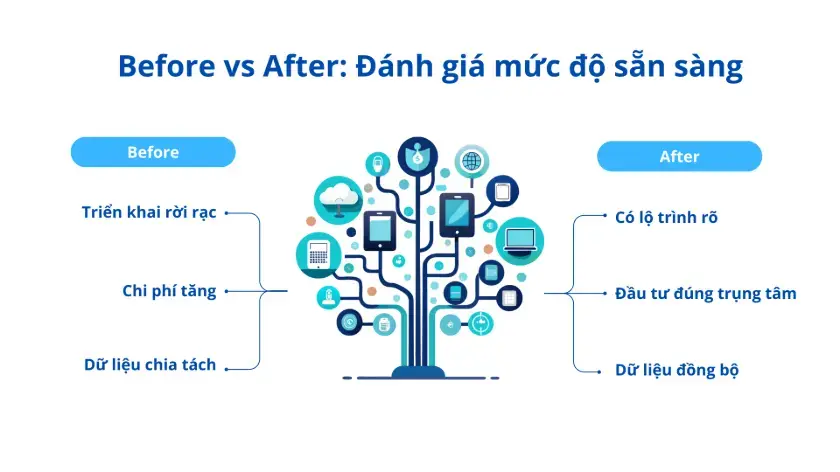
Many businesses are starting to transform by implementing new systems or technologies without a consensus across the organization. When each department operates in its own way, data becomes fragmented and difficult to consolidate. This results in overall effectiveness not meeting expectations. Evaluation helps businesses gain a clear understanding of the current situation before making investment decisions. By understanding their strengths and limitations, businesses can establish a reasonable order of priorities. For example, if the data is not synchronized, it needs to be standardized before deploying advanced analytical tools. In addition to optimizing implementation, evaluation also helps reduce financial risks. Investments are made based on actual needs rather than following trends. As a result, the transformation process is more directed and easier to control.
Digital Maturity Model
The digital maturity model divides the development process into various levels. The initial stage often involves the application of individual technologies within each department. As development progresses, data is connected to enhance coordination capabilities. At a higher level, information becomes the foundation for management decisions. The advantage of this model is that it helps businesses clearly visualize the development roadmap step by step. Identifying the current level allows organizations to set appropriate goals for the next stage. As a result, the transformation process has a clearer direction. However, each business has its own characteristics, so a rigid application is not feasible. Therefore, the maturity model is often combined with other methods to more accurately reflect operational realities.
Competency-based assessment model
This model focuses on capability groups such as strategy, data, technology, processes, and people. Each group is analyzed separately to identify strengths and areas for improvement. This approach helps businesses clearly see the root causes of operational issues. A key feature of the model is its ability to be directly applied in practice. Businesses can quickly recognize what needs to be prioritized first, such as standardizing processes instead of investing in additional technology. This helps utilize resources more effectively. Many organizations today combine the digital maturity model with assessments based on capability pillars to gain a comprehensive view of both strategy and operations.
The core pillars in assessing the level of readiness for digital transformation
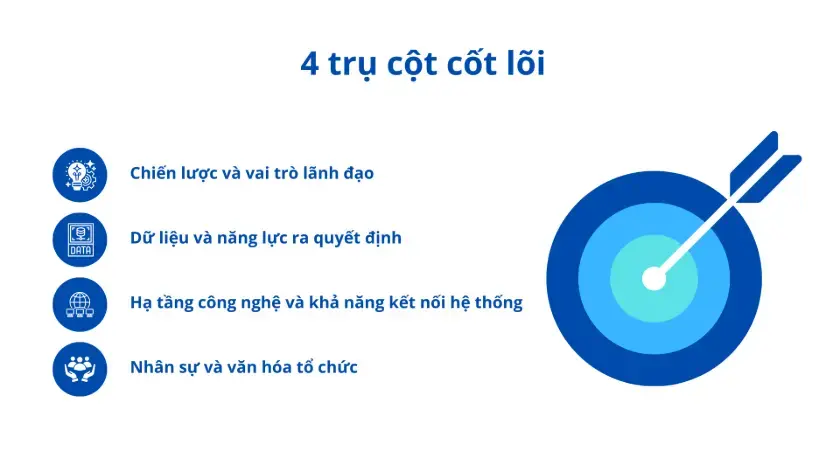
Strategy and Leadership Role
The guidance from leadership plays a crucial role in the transformation process. If the goals are unclear, businesses can easily implement trends that lack real effectiveness. Leaders need to clearly define objectives such as increasing efficiency, reducing costs, or improving customer experience. The selection of priority projects also directly impacts the results. Instead of implementing everything at once, businesses should start with projects that provide clear value. This approach helps make the transformation process more stable. Additionally, the role of leadership is also reflected in creating an environment ready for change, helping the team understand the goals and participate in the implementation.
Data and decision-making capability
Data is an important foundation that helps businesses monitor activities and make accurate decisions. When information is well-managed, the analysis process becomes quicker and easier to use. This helps organizations respond promptly to changes. However, many businesses face difficulties due to dispersed or inconsistent data. In such cases, analysis becomes less effective and does not support management well. This is content that needs to be carefully checked during the evaluation phase. When data is effectively leveraged, operational decisions will be based on specific information rather than intuition, thereby reducing errors and enhancing performance.
Technology infrastructure and system connectivity capabilities
Businesses often use various software to serve different functions. If the systems cannot exchange information, personnel must manually handle many steps, reducing the speed and efficiency of work. The technology infrastructure also needs to be flexible enough to meet future expansion needs. Early assessment helps businesses avoid having to change the entire system as the scale increases. Additionally, security factors are becoming increasingly important as digitalization activities grow. A stable and secure infrastructure is a necessary condition for continuous operation.
Human resources and organizational culture
Technology only realizes its value when used correctly. If the team lacks the appropriate skills, the effectiveness of implementation will significantly decrease. Therefore, training and enhancing digital capabilities are factors that need to be emphasized. The work environment also directly affects adaptability. Organizations that encourage learning often find it easier to implement changes compared to those that resist innovation. When personnel clearly understand the goals and benefits of transformation, internal collaboration improves, helping the implementation process to proceed smoothly.
Digital Transformation Readiness Assessment Process
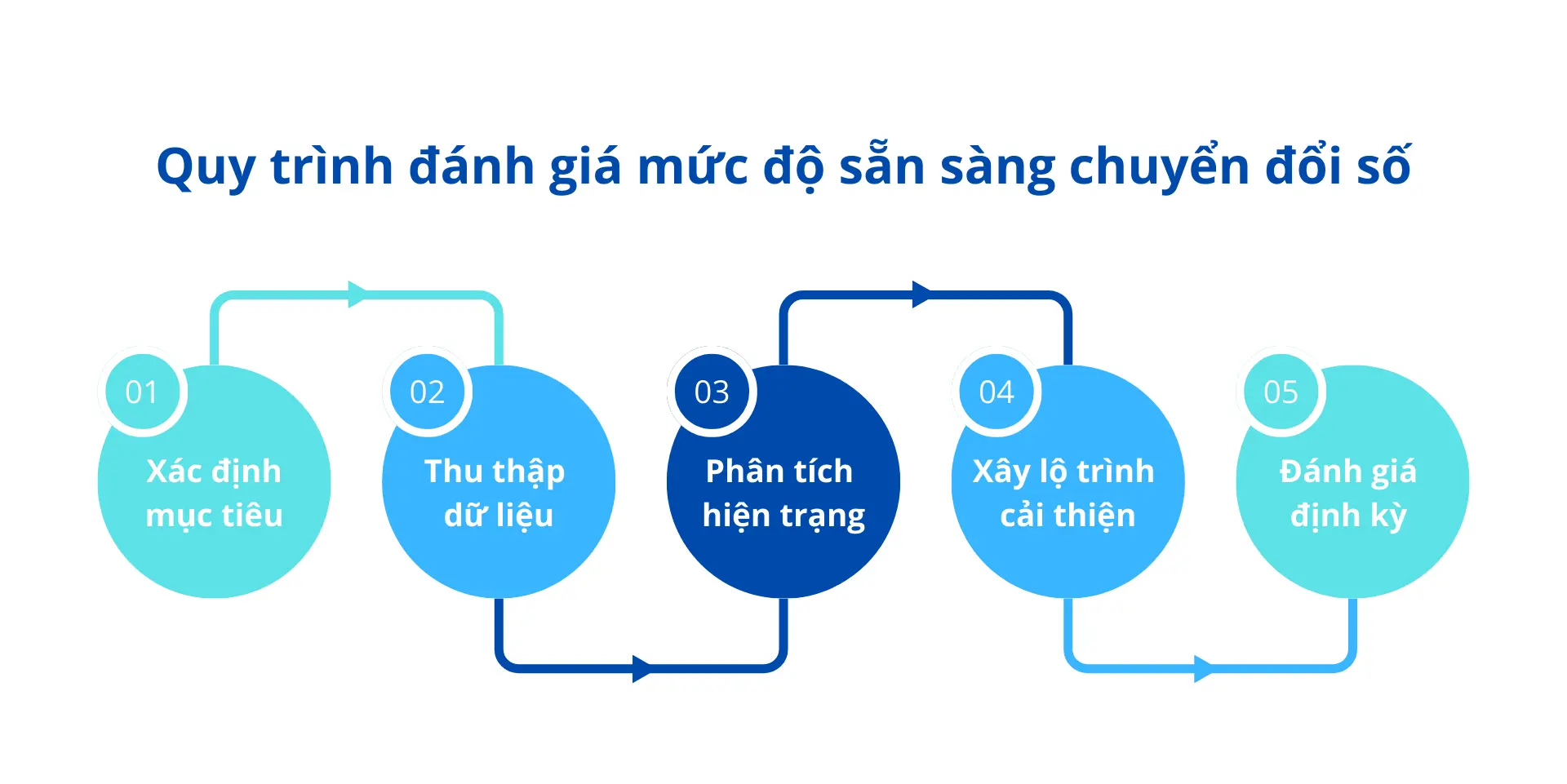
The evaluation process begins by identifying specific objectives. Businesses need to clearly understand which strategy or project the evaluation serves to ensure the scope of implementation is appropriate. Next, information is gathered about existing technology, workflows, data management practices, and team capabilities. Combining actual data with feedback from departments helps ensure that the results accurately reflect the current situation. After analysis, the business identifies the gap between the current state and the desired objectives. From there, the organization develops a phased improvement roadmap and conducts regular monitoring to make adjustments as needed.
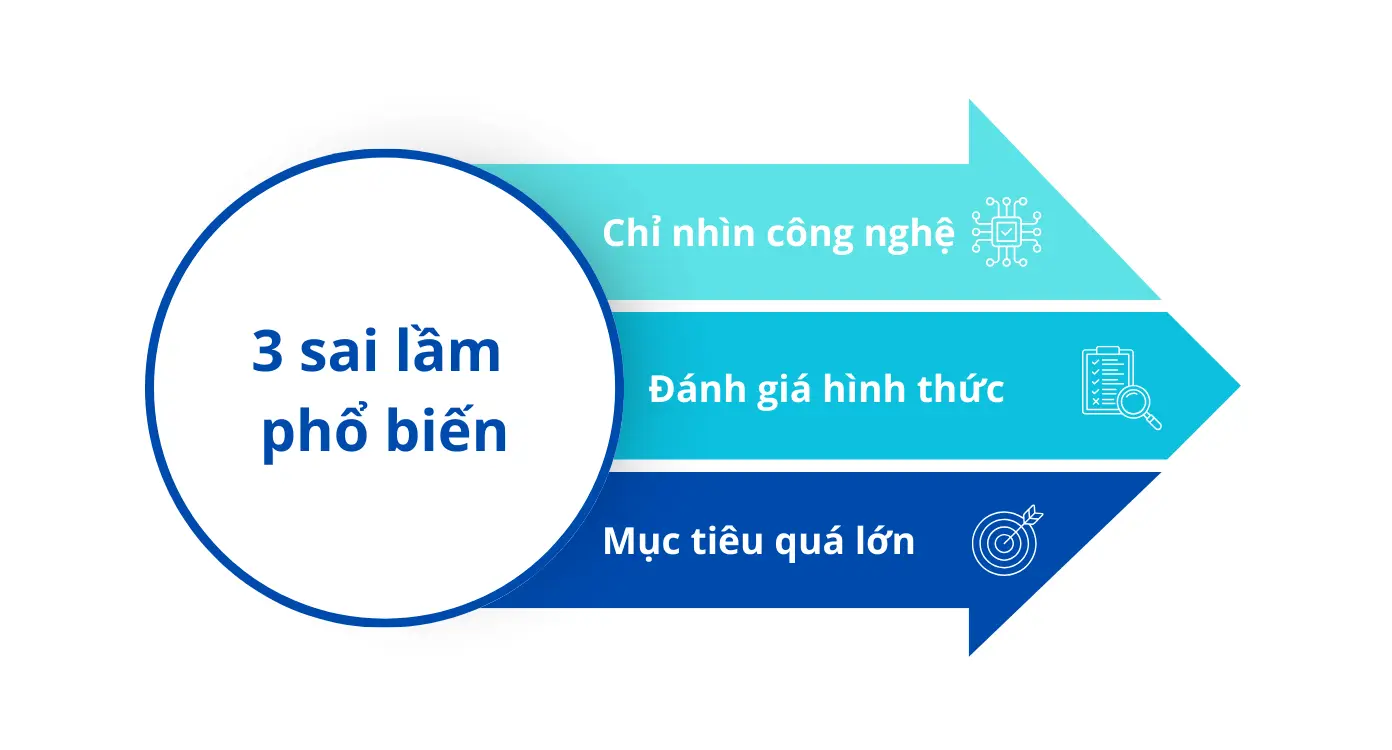
A common mistake is to focus solely on technology while overlooking processes and human factors. In doing so, businesses may misjudge the reasons why a project fails to achieve its goals. Additionally, many organizations conduct evaluations but do not translate the results into specific actions. Without a clear improvement plan, evaluations will not provide real value. Another issue is setting goals that are too high compared to current capabilities. A step-by-step approach often helps businesses achieve more sustainable results.
Current trends in assessing digital transformation readiness
The new trend focuses on the ability to leverage data for decision-making rather than just counting the number of technologies being used. This reflects the practical management requirements in a volatile business environment. Additionally, the level of coordination between departments is also considered an important criterion. When data is shared and processes are unified, operational efficiency increases significantly. Many companies are now shifting to periodic assessments to track progress over time. This approach helps organizations adjust their plans more flexibly in response to market changes.
Conclusion
Assessing the level of readiness for digital transformation is a step that helps businesses understand their current capabilities before launching large-scale projects. By accurately identifying strengths and areas for improvement, businesses can develop a roadmap that aligns with actual resources, reducing risks and enhancing implementation effectiveness. This is an important foundation for stable digital transformation and creating sustainable value in the long term.
This article is an in-depth content related to the Digital Transformation topic of RIDE. For a comprehensive and systematic view, please refer to:Chuyển đổi số doanh nghiệp: Hướng dẫn toàn diện từ chiến lược đến triển khai.
References
- IBM Institute for Business Value – Digital Transformation Insights
- OECD – Digital Economy Outlook
- World Bank – Digital Development Reports
- Deloitte – Digital Transformation Research
- Gartner – Digital Business Maturity Framework
- McKinsey & Company – Digital Transformation Survey