
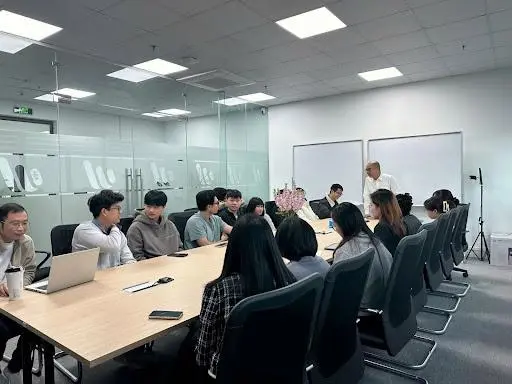
The training session was led by Dr. Trần Nguyên Các – Director of RIDE, with the goal of helping the team approach work with a project mindset rather than viewing tasks as isolated activities. The program aims for each member to be able to set goals, track progress, and complete tasks according to a clear process, thereby working more proactively and producing specific results instead of just "getting it done."
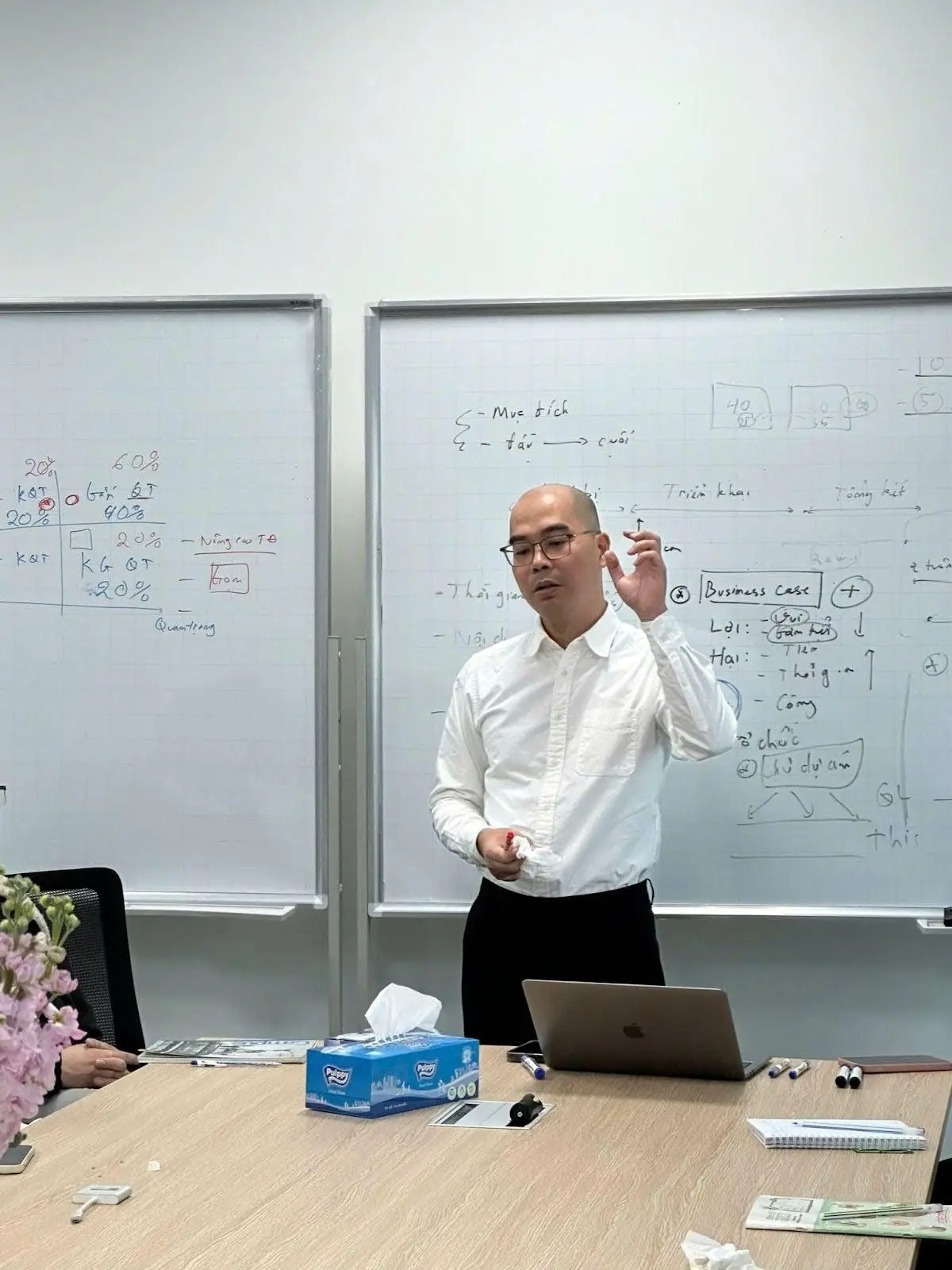
What is project management?
At the beginning of the training session, Dr. Tran Nguyen Cac presented a different explanation: a project is not defined by its size or complexity. As long as there is a task with a clear objective, along with a defined start and end time, that task embodies all the characteristics of a project and needs to be managed systematically.
The concise explanation has created a noticeable shift in the awareness of each participating member. Instead of viewing the project as a difficult concept to grasp, the team recognized their natural connection to daily work and carried out their tasks in line with the direction that RIDE persistently pursues.
The core principles that help a project succeed
After mastering the foundational concepts, the training session focuses on clarifying two key principles in project management:
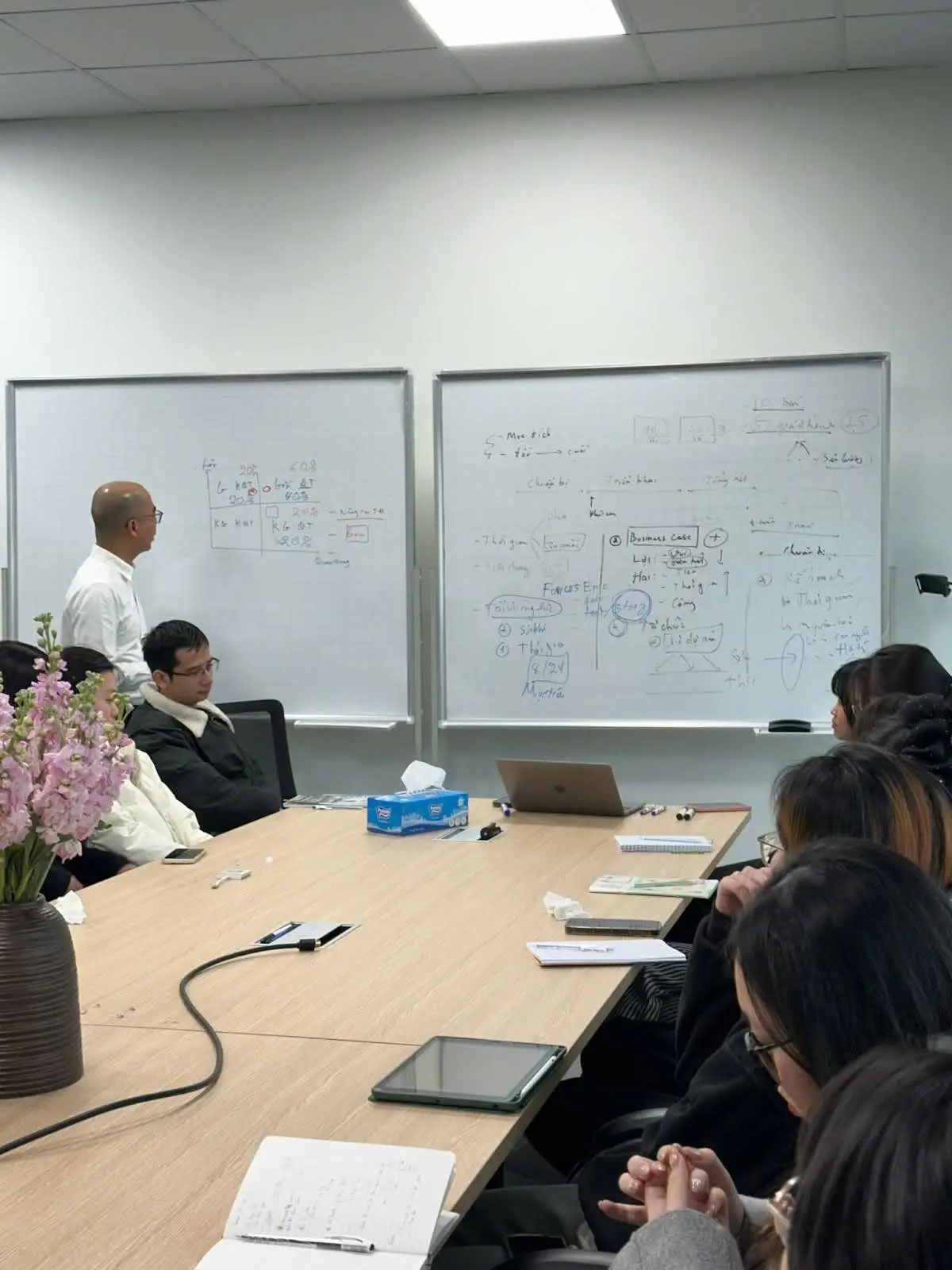
The three basic stages of a project
- Preparation: Define the objectives and scope.
- Deployment: Implement and monitor progress.
- Summary: Evaluate the results and draw lessons learned.
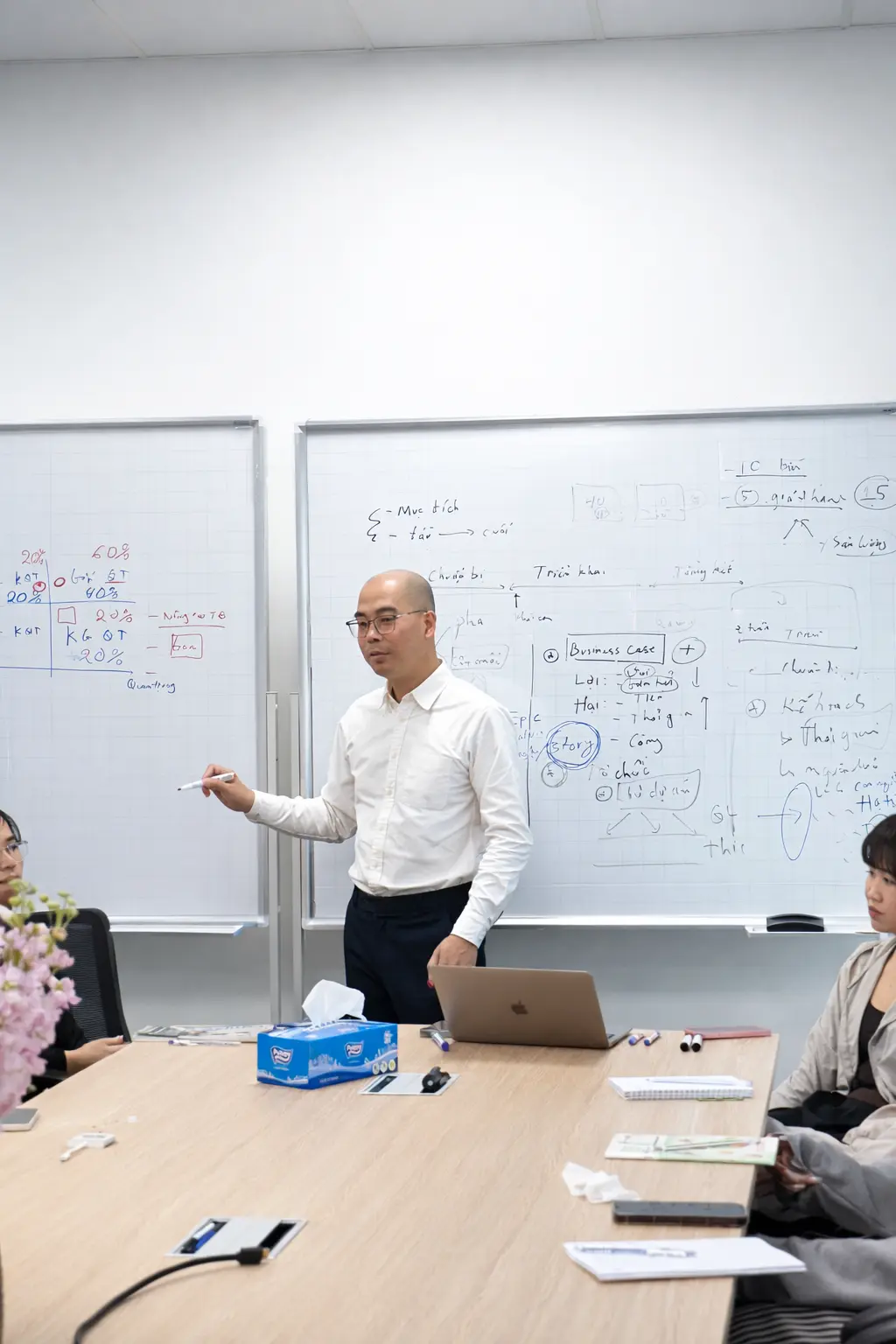
Three key factors for success
- Business Case: Understand the reason for doing it.
- Organization: Clear responsibilities and coordination.
- Plan: There are timelines and resources.
Understanding and effectively applying the two principles above is also how each RIDE member actively realizes the philosophy of "Fast - Simple - Quality" not only in internal work but also in collaborative projects with organizations, businesses, and external partners. The "Fast" mindset is reflected in the ability to respond promptly and stay on schedule; "Simple" is demonstrated through clarity, transparency, and coherence in each task, document, and coordination process; while "Quality" is committed to delivering polished, reliable results and clear added value for the recipient. The harmonious combination of these three elements creates RIDE's distinctive working style - professional, supportive, and fully responsible - thereby reinforcing trust and opening up many sustainable collaboration opportunities with partners in the journey of digital transformation and innovation.
How to apply in work
The highlight of the training session is its practicality and the ability to apply it immediately. By viewing each task as a small project, members can implement it in the spirit of the "Agile Organization" that RIDE is pursuing: setting clear goals, breaking down tasks for easier tracking and assignment, maintaining transparency in progress, and adjusting flexibly when there are real changes.
Thanks to the application of this loop, the work becomes clearer, coordination is smoother, and it improves with each execution. This is also the culture that RIDE aims for: Continuous learning, flexible adaptation, and constant improvement.
Conclusion & Next Steps
The training session concluded with a positive spirit and greater confidence from each participant. When the methods are understood correctly, work is no longer seen as "to be completed" but rather "to create value." The change in mindset of each individual is gradually building collective strength, helping RIDE operate effectively across departments and continue participating in collaborative projects with organizations and businesses—where demands for speed, clarity, and quality are always prioritized. In the coming time, RIDE will continue to maintain and expand practical training topics, so that each member can both enhance their personal competency standards and contribute to the common value and the projects that RIDE accompanies.